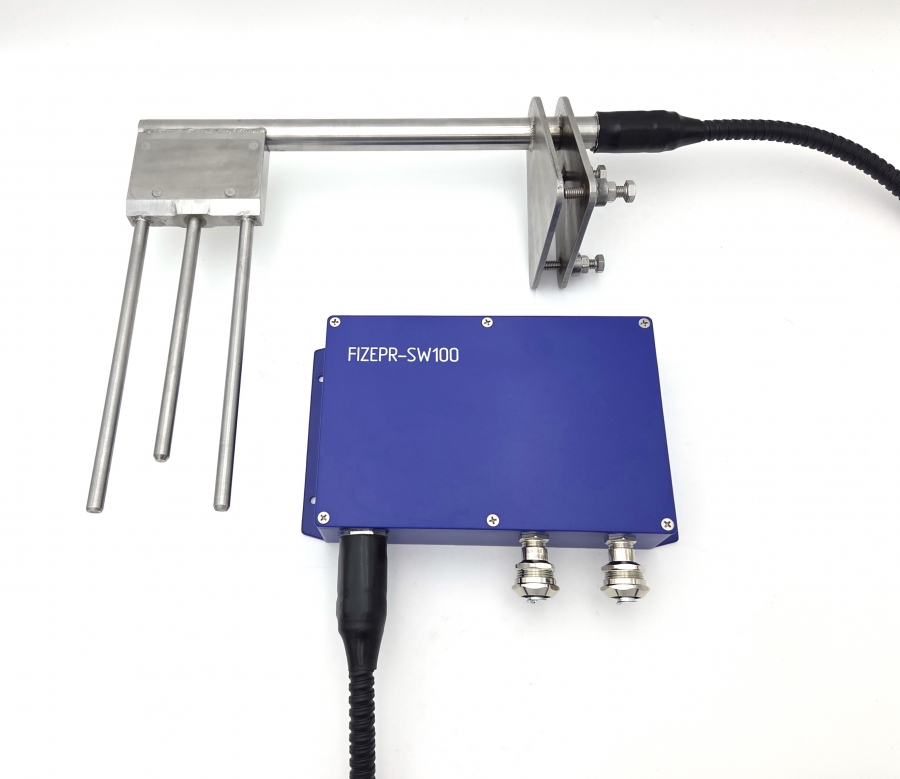
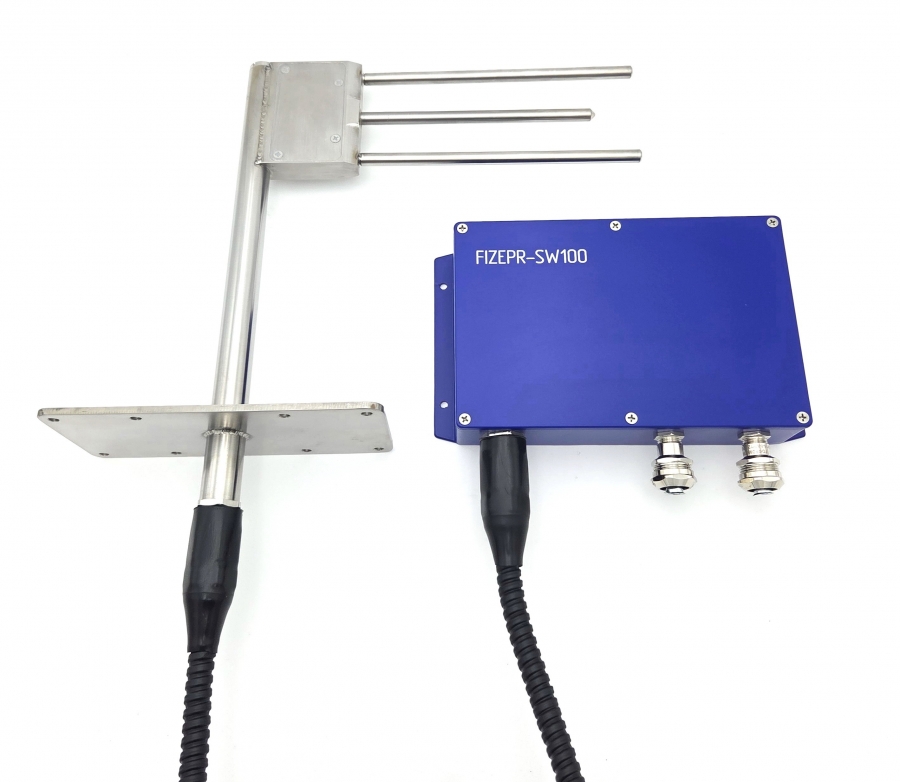
New series of in‑line moisture meters FIZEPR‑SW100.11.8 for mixed‑flow grain dryers
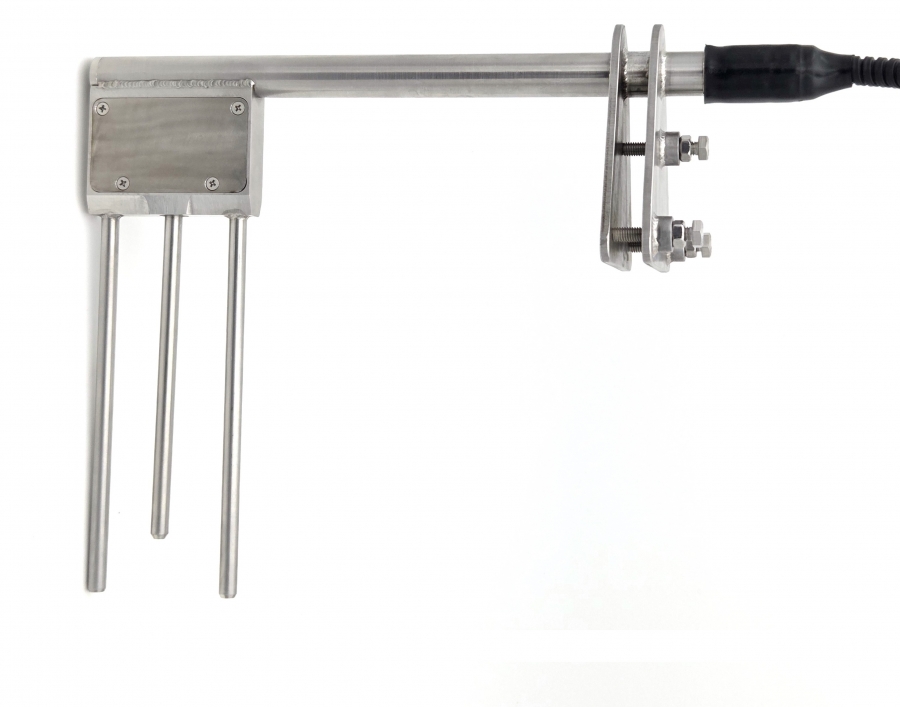
 Production of the new FIZEPR‑SW100.11.8 series moisture meters has been launched. They are specifically designed for use in shaft grain dryers and for measuring grain moisture in bunkers.
Key advantages:
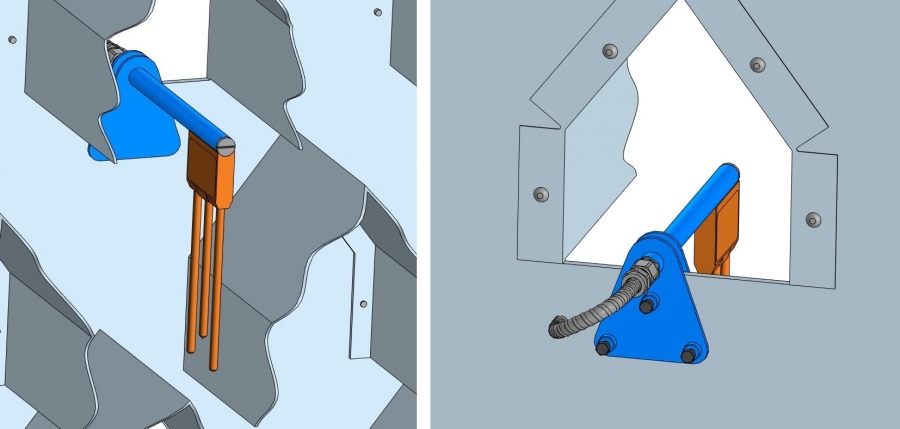
- Easy installation. The sensor is inserted into the air duct window without the need for special holes in the dryer wall. Thanks to the clamp, the sensor is easily secured inside the dryer. Such mounting allows you to quickly change the measurement point when selecting the optimal control location.
- High accuracy. The well‑thought‑out probe shape ensures constant renewal of grain in the measurement zone and its tight contact with the pins.
- Instant temperature compensation. A thermistor is built directly into the measuring pin. Grain temperature is determined without delay, which is critical for correct moisture measurement in the dryer.
- Self‑cleaning by grain flow. Grain dust and husks are washed away by the grain flow, eliminating the problems typical of flat‑sensor devices (commonly used in dryers), which start to give false readings due to build‑up.
- High operating temperature. The FIZEPR‑SW100.11.8 series sensors allow moisture measurement in the hot zone, giving the control system the ability to respond to overheating or underdrying 15‑20 minutes faster. Most known sensors require placement in the "cold zone" (at the dryer outlet).
- Easy verification of measurement accuracy. To check accuracy, it is sufficient to remove the sensor from the air duct window (without dismounting the electronic unit) and place it in a plastic bucket with grain of known moisture content.
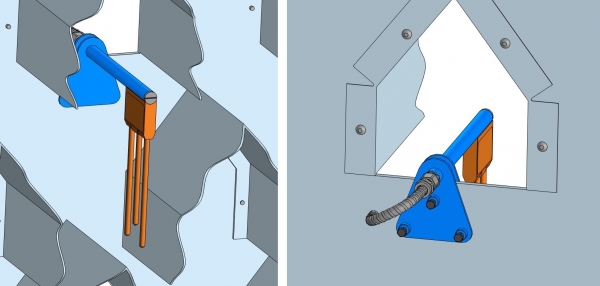
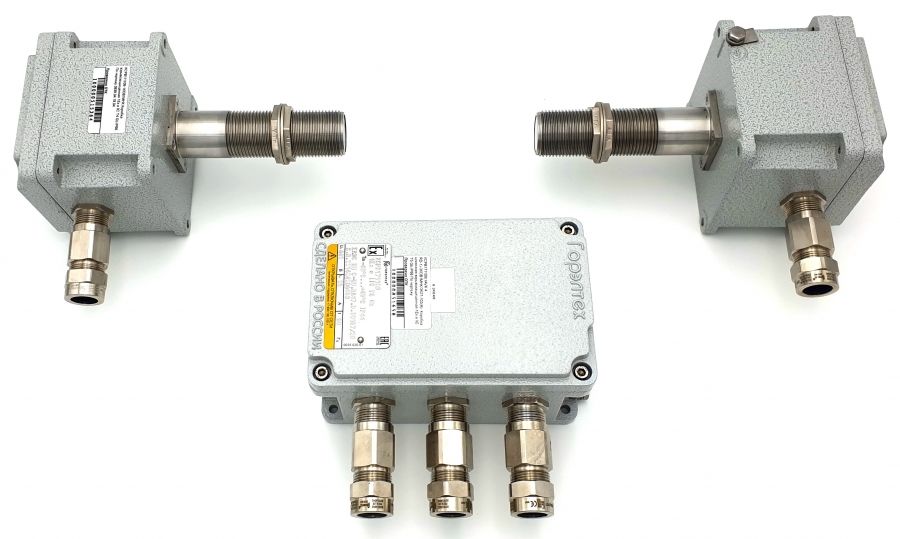
The FIZEPR‑SW100.11.8x series includes various versions. The photo below shows the FIZEPR-SW100.11.81 / FIZEPR-SW100.11.82 moisture meters. These sensors feature a compact flat housing only 23 mm thick, creating less obstruction to the grain flow and ensuring optimal filling of the sensor with grain.
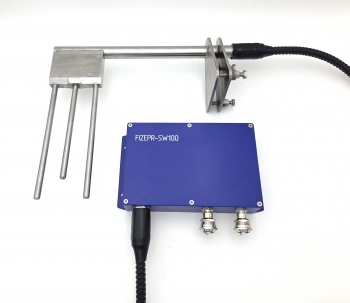 FIZEPR‑SW100.11.81
 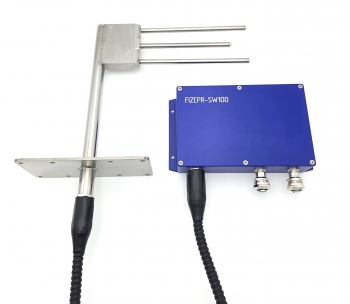 FIZEPR-SW100.11.82
operating features of moisture meters in a mixed-flow grain dryer
When the discharge gates (outlet mechanism) of the mixed‑flow grain dryer are opened and the grain starts to move, the readings of the in‑line moisture meter drop sharply by approximately 0.5% for the sensor installed at the bottom of the dryer, and noticeably more for the sensor at the top of the dryer. When the gates are closed, the readings return to normal.
Why readings change when the discharge gates are opened
In the static state (gates closed), the grain is maximally compacted around the sensor under its own weight. When the gates open, the grain mass starts moving downward, the layer "loosens," and its bulk density decreases. All moisture meters respond to density: when it drops, the instrument registers a decrease in dielectric permittivity and gives a low moisture reading.
In addition, as soon as the grain starts moving, product from the upper sections of the shaft begins to pass through the monitoring zone. If the sensor is located at the outlet (in the cooling or final drying zone), after the initial drop the readings may rise because hotter and wetter grain, which has not yet fully released moisture, reaches the sensor.
How the dryer automation handles this effect
To prevent false spikes when the discharge gates open from disrupting the logic of the automatic process control system (APCS), the following solutions are used:
- Software delay (filtering). The dryer controller ignores the moisture meter readings at the moment the gates open and for a few seconds after they close, until the flow stabilises.
- "Stop‑based" value capture. The system reads and uses clean moisture readings only in the intervals between discharges, when the grain is stationary.
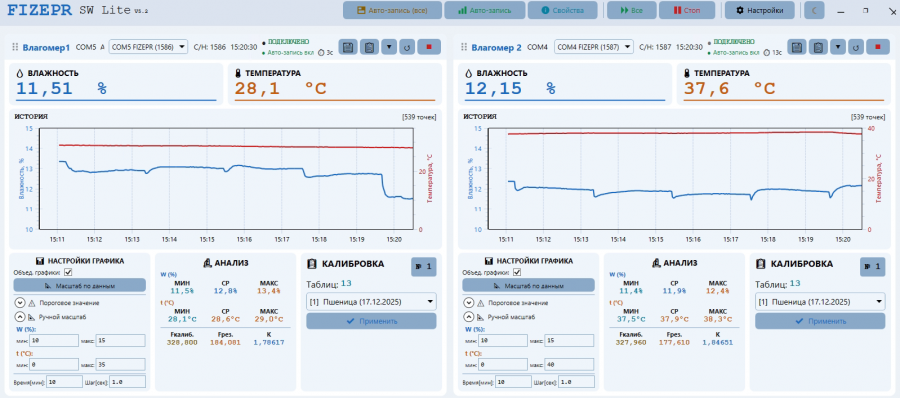
moisture graphs for wheat drying
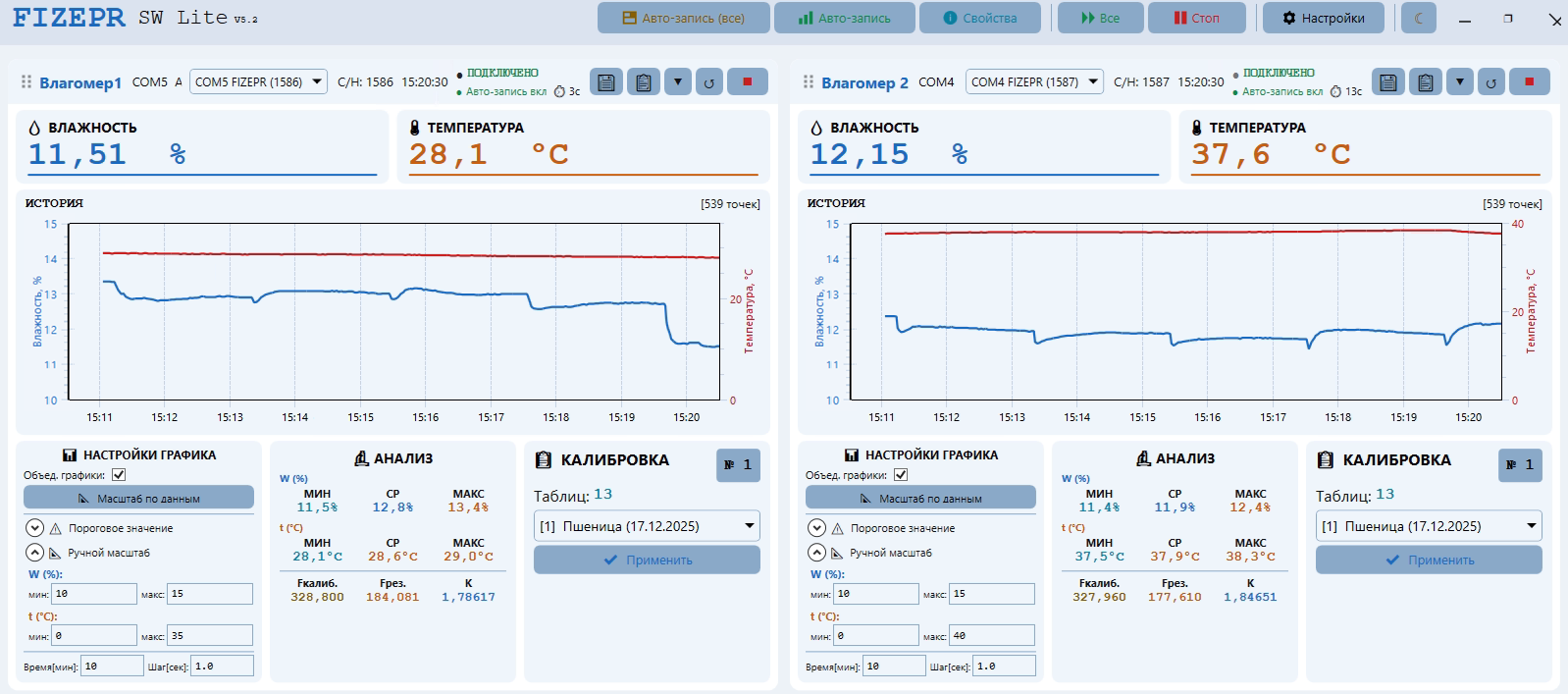
The attached graphs are scaled with the lower moisture limit at 10% and the upper limit at 15%.
For the moisture meter installed at the bottom of the mixed‑flow grain dryer, the moisture readings fluctuate within ±0.5% (without averaging). Averaging significantly reduces these fluctuations. For the sensor installed at the top, the fluctuations are much more pronounced because it "sees" under‑loading — the grain around this sensor is not compacted, unlike the grain at the bottom sensor.
To measure grain moisture at the dryer inlet, it is recommended to move the measurement point from the upper air duct window directly to the receiving bunker.
Advantages of this solution:
- The influence of grain flow movement between air ducts on measurement results is eliminated.
- Grain in the bunker is in a more static state, which improves moisture reading accuracy.
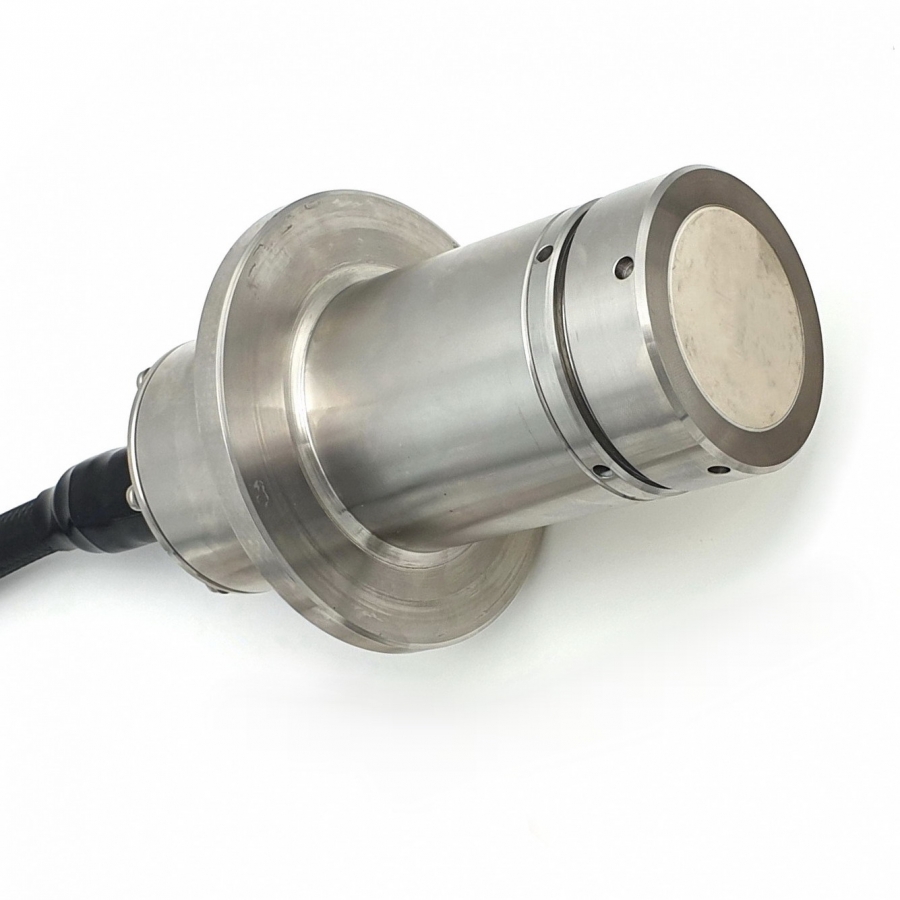
To implement this solution, we recommend using the specialised FIZEPR‑SW100.11.82 sensor.
© Design Bureau Fizelektronpribor Ltd, 2026.08.10